The New Food Guide Pyramid for Kids – A Parent’s Guide to Building Healthy Plates

For decades, parents were taught to follow the traditional food pyramid—heavy on grains, light on protein, and unclear about sugar and processed foods. At Nourished Knights, we have never subscribed to that outdated model. From the very beginning, our philosophy has centered on real food, protein-forward meals, vegetables, fruits, and blood sugar balance. This way of eating has always been at the forefront of our teaching—long before the new pyramid existed. In many ways, it’s about time the government caught up with what science and families have already seen firsthand: this is how the human body truly thrives. Today, nutrition science tells a very different story. The new food guide pyramid shifts the focus toward real, whole foods that support brain development, steady energy, and healthy growth in children.
At Nourished Knights, this new approach aligns perfectly with our philosophy and our Nourished Knights Plate. Instead of building meals around carbs, we teach families to anchor meals in protein, vegetables, fruits, and healthy fats. This creates balanced blood sugar, better focus, and long-lasting energy for kids.

The Nourished Knights Plate
The Nourished Knights Plate is simple and realistic for busy families. Each meal should include a quality protein source such as eggs, chicken, beef, fish, yogurt, or beans. Vegetables and fruits are daily non-negotiables, providing fiber, vitamins, and gut support. Whole, minimally processed foods form the foundation, while healthy fats like avocado, olive oil, nuts, and seeds support brain development. Sugar and ultra-processed foods are very limited and treated as occasional extras rather than everyday fuel.
How the New Food Guide Pyramid Breaks Down for Kids
Under the new pyramid, protein becomes the foundation in stead of a side dish. Protein supports muscle growth, stabilizes blood sugar, improves focus, and keeps kids full longer. Children benefit from having protein at every meal and most snacks.
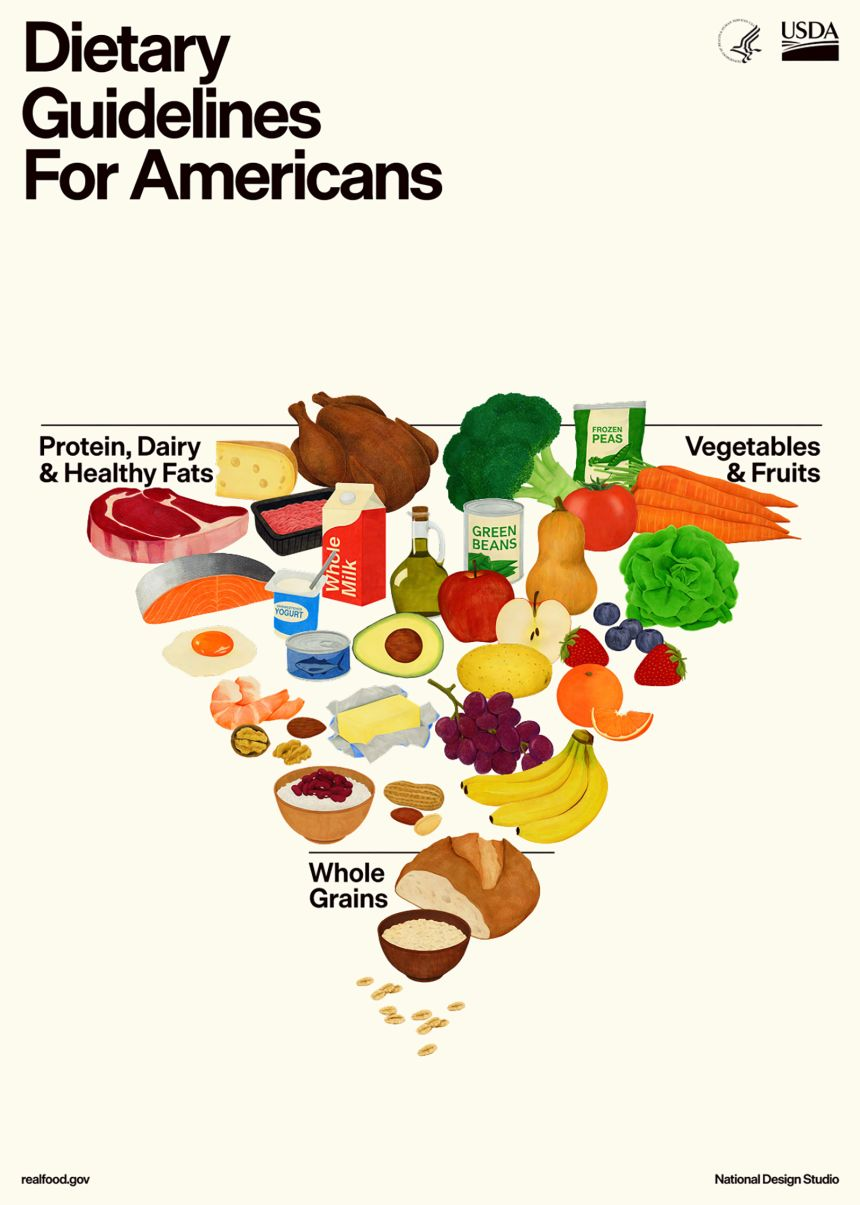
Vegetables and fruits make up the next major layer. They provide essential vitamins, minerals, antioxidants, and fiber that support digestion and immunity. The goal is exposure and consistency, not perfection. Kids may not love every vegetable right away, but repeated exposure builds acceptance over time.
Healthy fats follow closely behind. These fats are critical for brain development, hormone balance, and nutrient absorption. Foods like avocados, olive oil, grass-fed butter, nuts, and seeds play an important role in children’s diets.
Whole carbohydrates are still included, but they are no longer the base of the pyramid. Carbs are meant to provide energy, not dominate the plate. Choosing whole food sources like sweet potatoes, oats, fruit, and rice is encouraged, while refined grains such as white bread, crackers, chips, and sugary cereals should be limited.
Sugar and ultra-processed foods now sit at the very top of the pyramid. These foods are meant to be occasional, not daily. They are not rewards, meal replacements, or emotional coping tools. When sugar becomes a regular part of a child’s diet, it contributes to blood sugar crashes, mood swings, poor focus, and increased cravings.
What a Day of Eating Looks Like

A Nourished Knights day might start with scrambled eggs, avocado, and berries for
breakfast, or Greek yogurt topped with nuts and a drizzle of honey. Some families prefer a protein smoothie made with spinach, banana, and nut butter.
Lunch could look like a chicken wrap filled with colorful vegetables, leftover beef with roasted potatoes, or tuna salad served with whole-grain crackers and carrot sticks.

Dinner might include salmon with broccoli and rice, taco bowls with ground beef, peppers, and avocado, or a simple chicken stir-fry loaded with mixed vegetables.
Snacks are treated as mini-meals. An apple with nut butter, cheese with cucumber slices, a hard-boiled egg, or yogurt with seeds keeps kids full and supports stable energy.
What Parents Should Be Limiting
The new food pyramid makes it clear that sugar and processed foods should not be daily staples. Sugary drinks, packaged snacks, refined cereals, and frequent desserts can disrupt blood sugar and increase picky eating behaviors. Limiting these foods helps children better recognize hunger cues and enjoy real meals.
Why This Shift Is Better for Kids
This updated approach supports brain development, improves focus, stabilizes energy, protects gut health, and builds lifelong habits. Instead of telling kids to "eat less," we teach them how to eat better by choosing foods that truly nourish their bodies.
How Parents Can Teach This at Home
Parents can model the Nourished Knights Plate at every meal, letting kids help build balanced plates. Talking about what foods do for the body builds understanding and ownership. The goal is consistency, not perfection. One balanced meal at a time adds up.
Final Thoughts
The new food guide pyramid is not about restriction. It is about nourishment. When families prioritize protein, vegetables, fruits, and whole foods, kids naturally crowd out the junk. The Nourished Knights Plate makes healthy eating simple, realistic, and empowering.
You do not need perfection. You need patterns. And those patterns will shape your child’s health for life.


Comments